
Reject criteria for slings, shackles and chains: the damage that takes gear out of service
Between thorough examinations, it is the person using the gear who decides whether a sling, shackle or chain is fit to lift with, and that decision saves lives. A single damaged accessory can fail under load with catastrophic results, so knowing the reject criteria, the signs that mean an item must come out of service immediately, is a core competence for anyone working with lifting gear. It is not about being cautious; it is about knowing exactly what makes an accessory unsafe.
This reference sets out the damage that takes lifting accessories out of service, by type: webbing and round slings, wire rope slings, chain slings and shackles. If an accessory shows any of these, it should be removed from use and quarantined, not lifted with.
A lifting accessory must be removed from service if it shows damage that reduces its strength or reliability, or if it can no longer be identified. Take a webbing or round sling out of service for cuts, tears, abrasion, chemical or heat damage, or a missing or illegible label. Reject a wire rope sling for broken wires, kinks, crushing, corrosion or a damaged termination. Reject a chain sling for stretched, bent, cracked or worn links, or heat damage. Reject a shackle for wear, deformation, cracks, corrosion, a damaged or non-original pin, or a missing safe working load marking. If in any doubt, take it out and have it examined by a competent person.
What is the general rule for rejecting lifting gear?
The overarching principle is simple: any lifting accessory that shows damage which could reduce its strength, or that can no longer be positively identified and linked to its safe working load, must be removed from service. It does not matter how minor the damage looks or how busy the job is. A lifting accessory is either fit to lift with or it is not, and if there is genuine doubt, it comes out and goes to a competent person. Loss of the identification and safe working load marking is itself a reason to reject, because you can no longer confirm what the item is rated to lift.
When should a webbing or round sling be rejected?
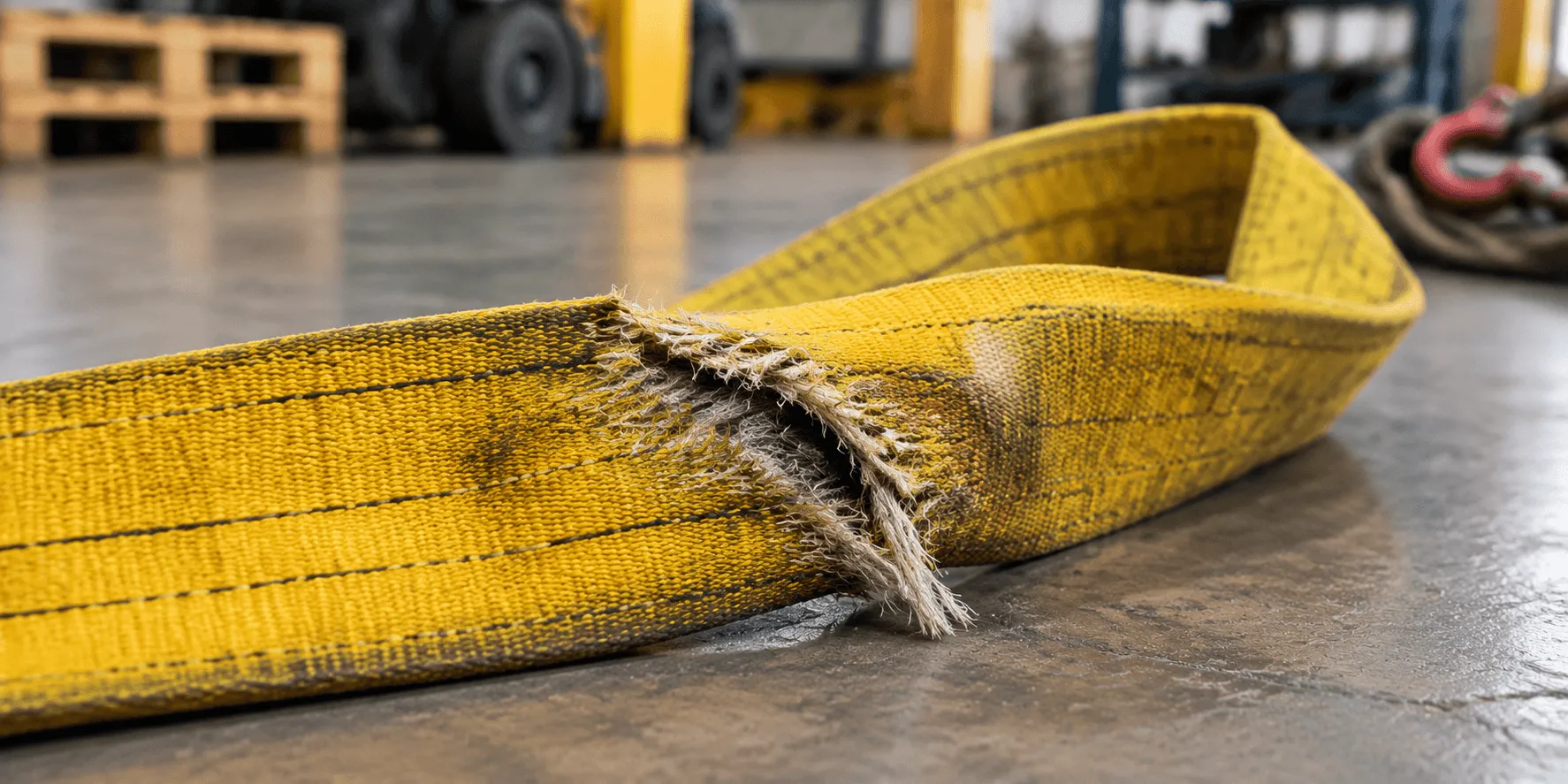
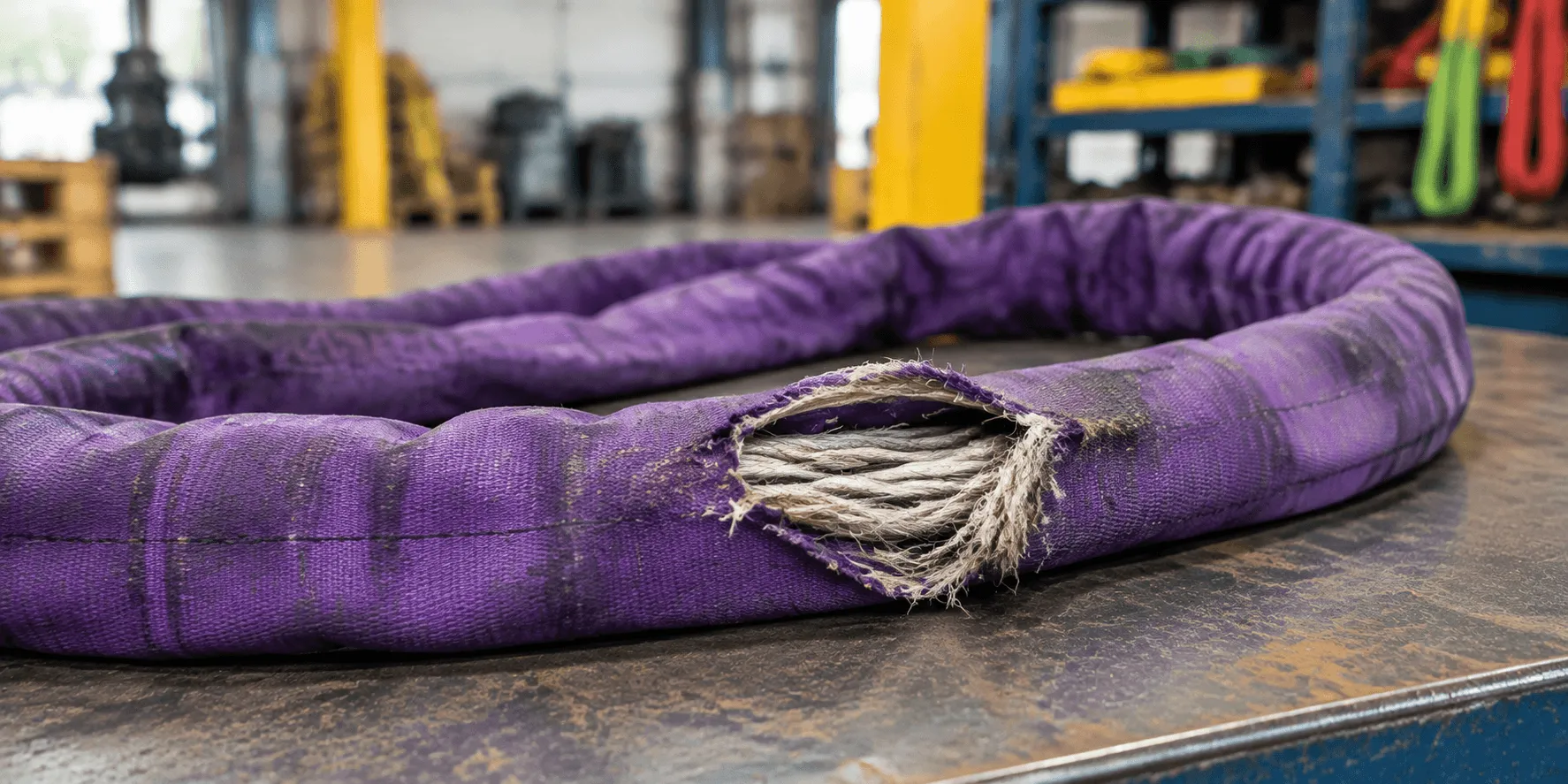
Fabric slings are vulnerable to cuts and to damage that is easy to miss. Remove a webbing or round sling from service for cuts, nicks, tears or holes in the webbing or the cover of a round sling; abrasion, fraying or surface wear that exposes fibres; chemical attack, staining or areas that feel hard, stiff or powdery; heat or friction damage, melting or glazing; damage to stitching, eyes or fittings; or a missing, illegible or detached label, so the safe working load and identification cannot be read. With a round sling, damage to the outer cover means the load-bearing core can no longer be relied upon, so cover damage is a reject.
When should a wire rope or chain sling be rejected?
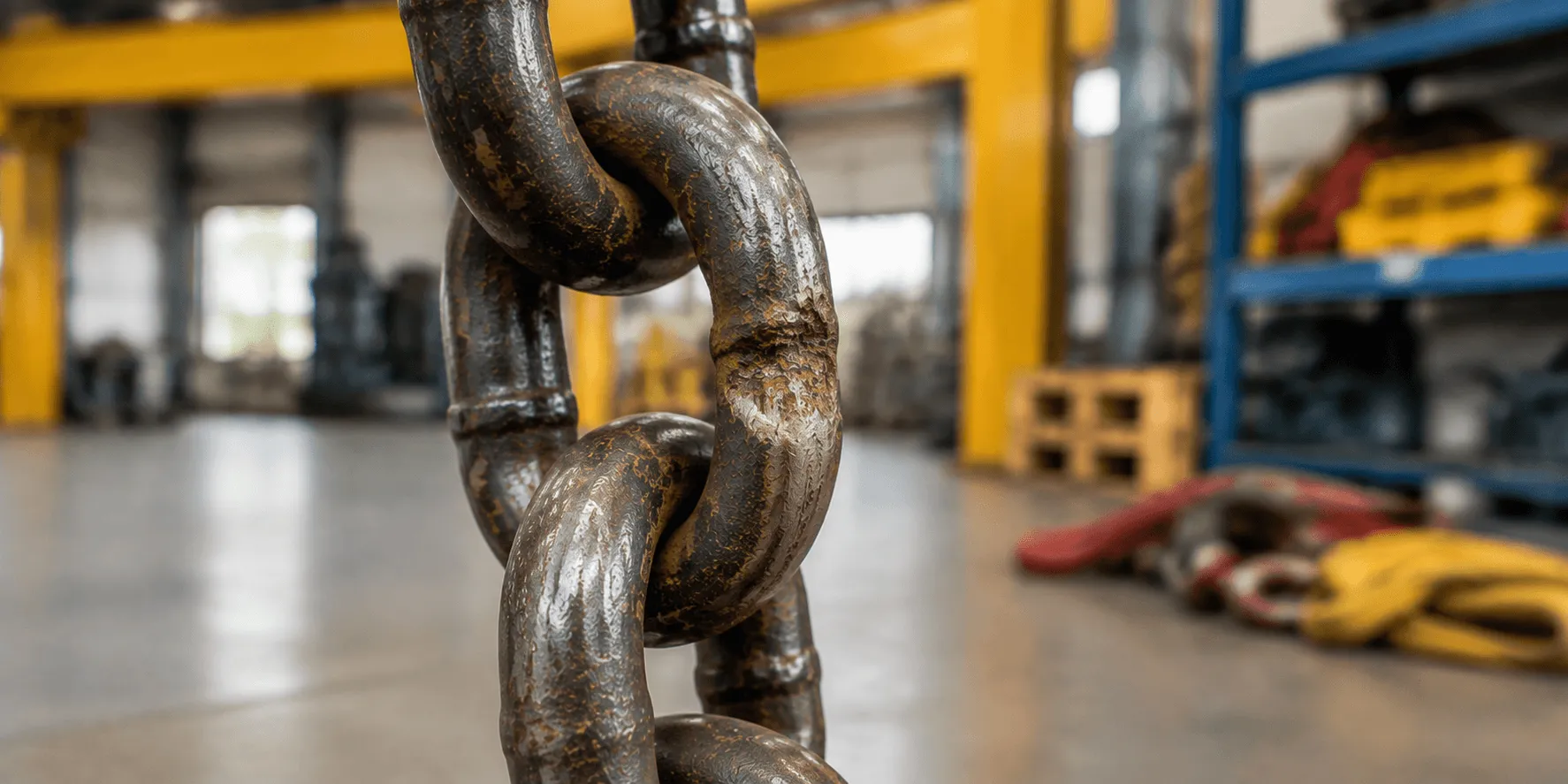
Wire rope slings should be taken out of service for broken wires, kinks, crushing or flattening, bird-caging, severe corrosion, heat damage, or damage to the ferrules and terminations. Any distortion of the rope structure is a warning sign. Chain slings should be rejected for stretched links (chain that has elongated under overload), bent, twisted or opened links, cracks, notches or gouges, significant wear at the link bearing points, corrosion, or heat damage. Because chain gives little visible warning before failure, worn or deformed links are treated seriously.
When should a shackle be rejected?
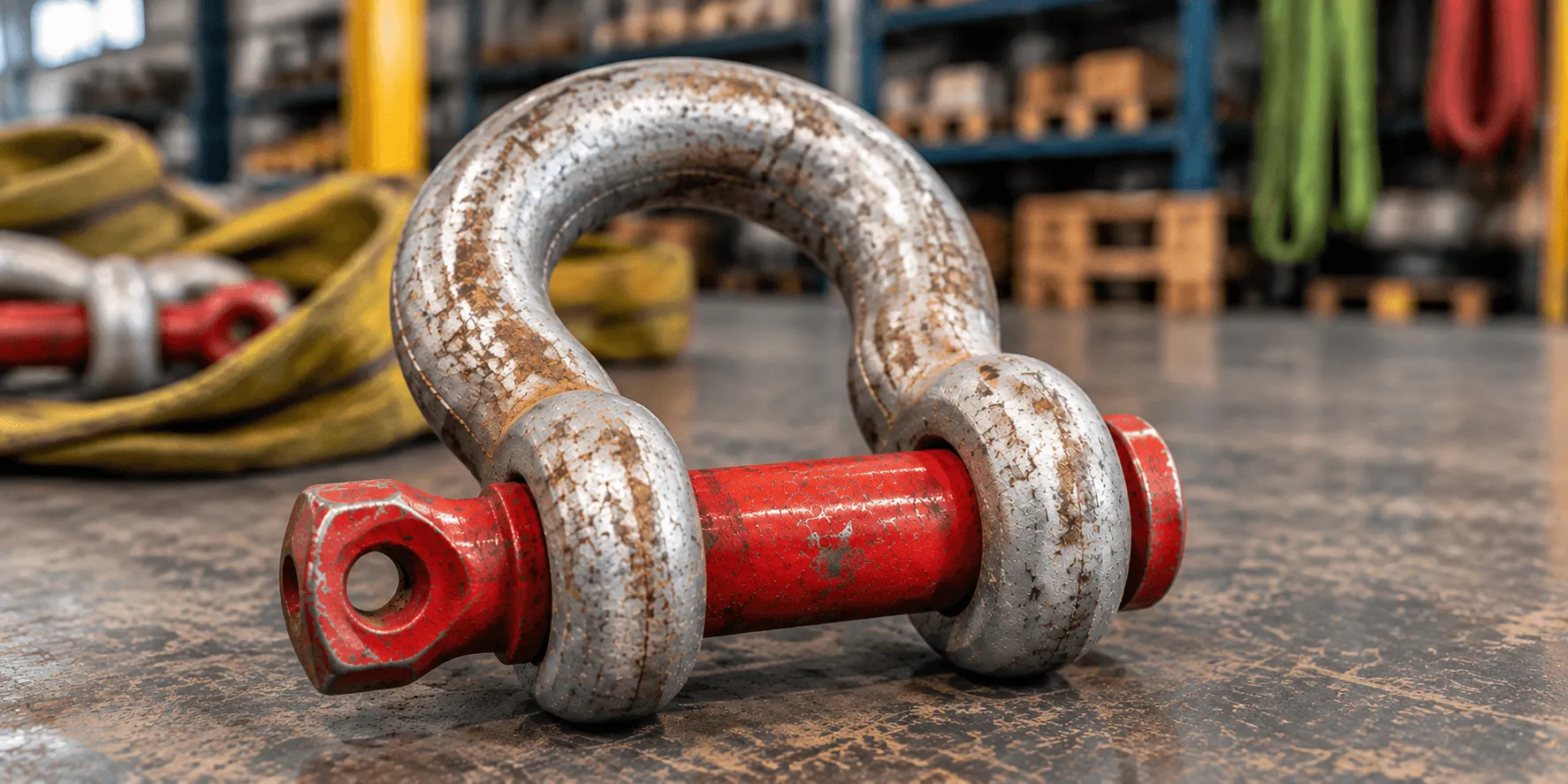
Shackles are robust but not immune. Remove a shackle from service for wear reducing its dimensions, deformation or opening of the body or bow, cracks, corrosion or pitting, thread damage, a bent, damaged or non-original pin (never substitute a bolt for the correct pin), or a missing safe working load marking. A shackle assembled with the wrong pin is not a rated shackle and should not be used.
What happens after an accessory is rejected?
A rejected accessory should be taken out of use immediately, segregated so it cannot be returned to service by accident, and either destroyed or assessed by a competent person, depending on the item and the damage. Managing this properly, the quarantining of failed gear, is a process in its own right. Pat O Brien Safety provides lifting accessory testing and certification and sling safety training so your team can apply these criteria confidently. See our chain slings and web sling safety awareness courses, and call 01 456 9415 to discuss your lifting gear.
Frequently asked questions
When should a lifting sling be taken out of service?
What are the reject criteria for a shackle?
Does a missing label mean a sling must be rejected?
Who decides if lifting gear is fit to use?
Train your team to inspect gear
Pat O Brien Safety runs sling safety awareness courses and tests lifting accessories across Ireland. Call 01 456 9415 to book training or examination.
Related resources: For duties on lifting equipment and accessories, see the Health and Safety Authority on lifting equipment.