
Thorough examination: six months or twelve, and what decides which
Every employer using lifting equipment in Ireland has to have it thoroughly examined at regular intervals, but there is constant confusion over whether that means every six months or every twelve. Getting it wrong is not a minor administrative slip: using lifting equipment that is out of examination is a safety and compliance failure. The good news is that the rule is clear once you know what decides the interval, and it comes down to what the equipment lifts.

This reference explains how often lifting equipment must be thoroughly examined under the Irish regulations, what determines the six-month versus twelve-month interval, and who is allowed to carry it out.
Under the Safety, Health and Welfare at Work (General Application) Regulations 2007, lifting equipment must have a thorough examination at least every six months where it is used for lifting persons or is a lifting accessory, and at least every twelve months for other lifting equipment, or in accordance with an examination scheme drawn up by a competent person. A thorough examination is also required after exceptional circumstances that could affect safety, such as damage or major repair. It must be carried out by a competent person, and a report of the examination must be produced.
How often must lifting equipment be thoroughly examined?
The interval is set by what the equipment lifts. Under the General Application Regulations 2007, the periodic thorough examination must be carried out at least every six months for lifting equipment used for lifting persons and for lifting accessories, and at least every twelve months for other lifting equipment. As an alternative, examinations can be carried out in accordance with an examination scheme drawn up by a competent person, which may set different intervals based on a risk assessment of the specific equipment and use.
So the first question is always: does this equipment lift people, or is it a lifting accessory? If yes, the default is six months. If it is other lifting equipment that does not lift people, the default is twelve months.
What counts as a lifting accessory versus lifting equipment?
This distinction is what trips people up. Lifting accessories are the components that connect a load to the lifting machine, and they fall into the six-month category. Lifting equipment more broadly includes the machines that do the lifting. In practice:
- 01
Six-month interval
Lifting accessories such as chains, slings (chain, wire rope, webbing and round slings), shackles, eyebolts and hooks, and any equipment used for lifting persons.
- 02
Twelve-month interval:
Other lifting equipment that is not used for lifting persons, such as certain lifting machines, subject to the regulations and any examination scheme.
Because the accessories a business uses every day, the slings, shackles and chains, fall into the six-month category, many businesses need a six-month cycle for their lifting gear even if larger equipment is on twelve months.
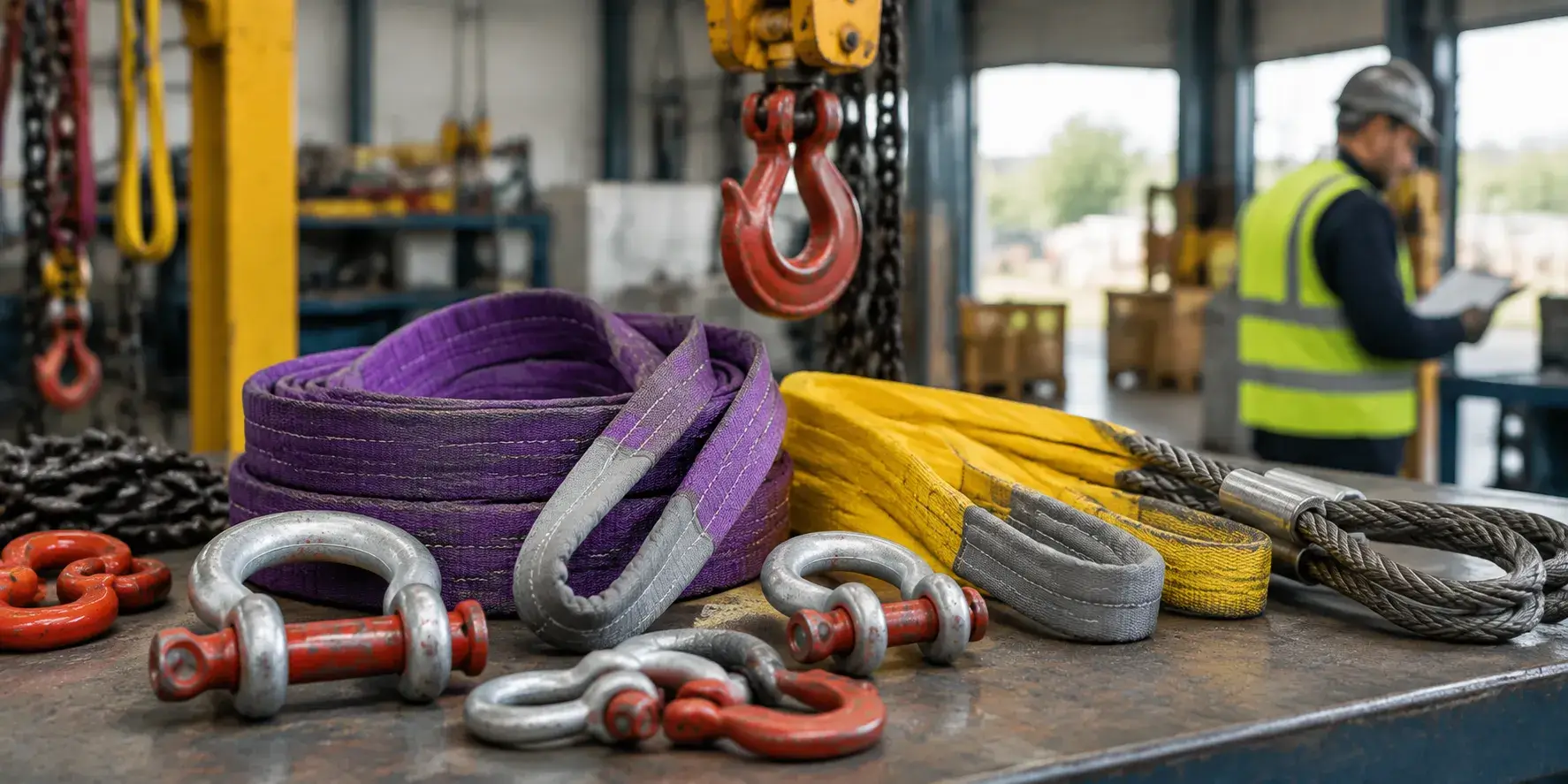
What counts as a lifting accessory?
Lifting accessories are the components that connect a load to the lifting machine, and they fall into the six-month category. In practice, this means chains, slings (chain, wire rope, webbing and round slings), shackles, eyebolts and hooks, and any equipment used for lifting persons. This distinction is what trips people up, because the accessories a business uses every day, the slings, shackles and chains, fall into the six-month category even if larger equipment is on twelve months.
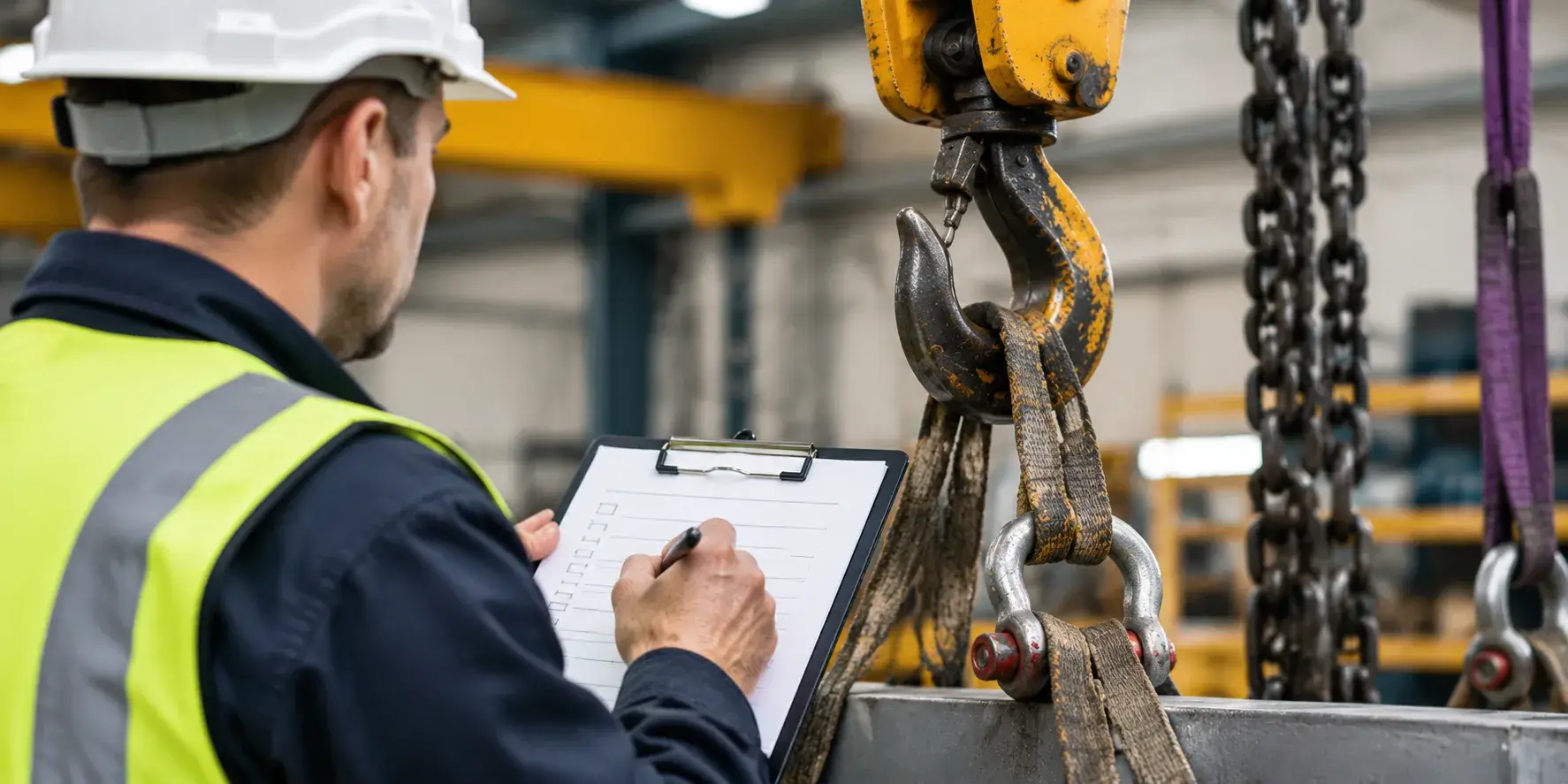
What falls under the twelve-month interval?
Lifting equipment more broadly includes the machines that do the lifting. Other lifting equipment that is not used for lifting persons, such as certain lifting machines, falls under the twelve-month interval by default, subject to the regulations and any examination scheme. Many businesses still need a six-monthly cycle for their lifting gear even where the larger equipment itself is on twelve months, because of the accessories attached to it.
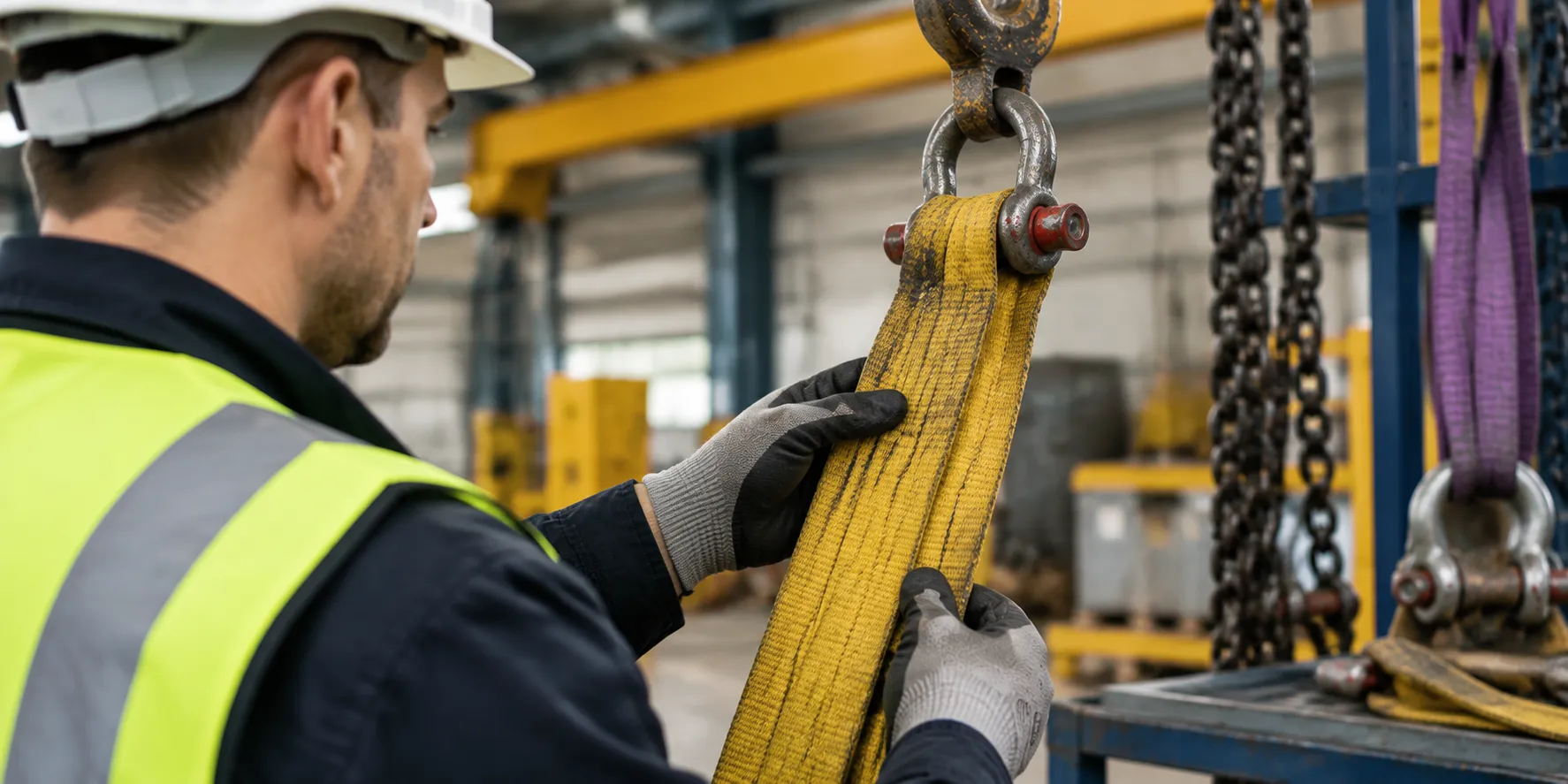
Who can carry out a thorough examination?
A thorough examination must be carried out by a competent person, someone with the practical and theoretical knowledge and experience to detect defects and assess their significance. This is distinct from the routine pre-use checks a user makes; the thorough examination is a formal, documented assessment. The competent person produces a report of thorough examination, which is the record that the examination was done and what it found. Using an out-of-examination item, or relying on someone who is not genuinely competent, undermines both safety and compliance.
When is an examination needed outside the regular interval?
The periodic interval is not the only trigger. A thorough examination is also required after exceptional circumstances liable to jeopardise the safety of the lifting equipment - for example significant damage, a major repair or modification, an accident, or a long period out of use. In those cases the equipment should be examined before it is put back into service, regardless of when the next scheduled examination is due. Treating the six or twelve month cycle as the only requirement, and ignoring exceptional events, is a common gap. Pat O Brien Safety provides testing and certification of lifting equipment and accessories, and training so your team understands the requirements. See our testing and certification service, and call 01 456 9415 to arrange examination of your lifting gear.
Frequently asked questions
How often does lifting equipment need a thorough examination in Ireland?
Do slings and shackles need examining every six months?
Who is allowed to thoroughly examine lifting equipment?
Is a thorough examination ever needed before the next due date?
Is your lifting gear in examination?
Pat O Brien Safety tests and certifies lifting equipment and accessories across Ireland. Call 01 456 9415 to arrange a thorough examination.
Related resources: Testing and certification service and chain slings safety awareness course can help support your workplace compliance requirements. For the General Application Regulations 2007, see the Irish Statute Book, S.I. No. 299 of 2007.