
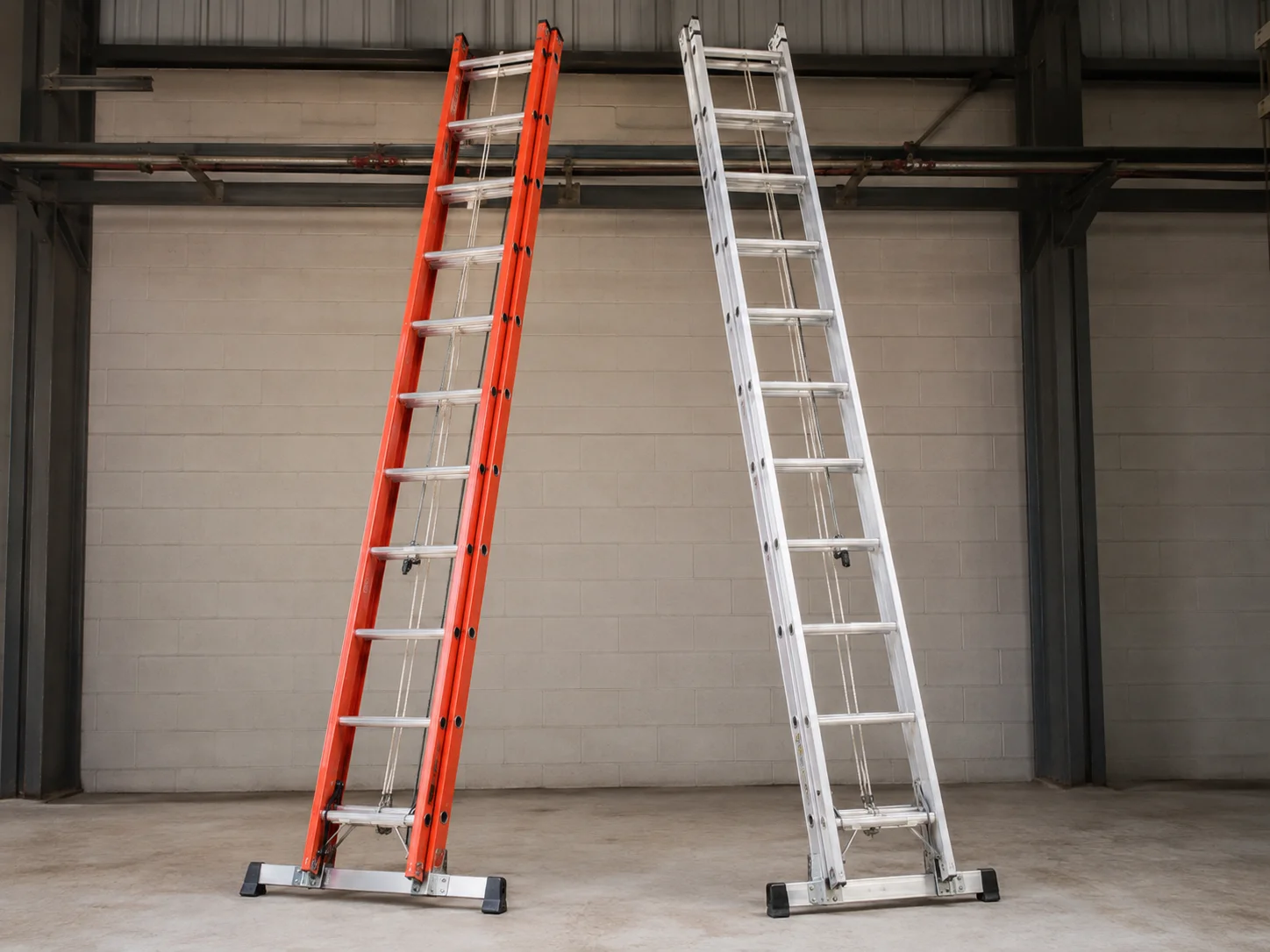
Fibreglass or Aluminium? Choosing a Ladder for Electrical Work
For most jobs, the choice between a fibreglass and an aluminium ladder is about weight and cost. For work near electricity, it is about safety, and it is not a close call. Aluminium conducts; fibreglass does not. Here is why the material matters, and when a non-conductive ladder is essential.
Aluminium conducts electricity, so an aluminium ladder near live electrical parts or overhead lines is dangerous, a contact can send current through the ladder and the person on it. Fibreglass does not conduct (when clean and dry), so a fibreglass ladder is the essential choice for any work on or near electricity: electrical installation and maintenance, work near overhead lines, and anywhere contact with a live part is possible. Aluminium ladders are lighter and cheaper and are fine away from electrical risk, while fibreglass is heavier, more durable and costs more. The rule is simple: for electrical work or anywhere near live conductors, use a non-conductive fibreglass ladder.
The safety difference
The core fact is straightforward: aluminium is a metal and conducts electricity, while fibreglass is non-conductive. If an aluminium ladder contacts a live part, a conductor, a piece of live equipment, or an overhead line, it can carry current, and the person on the ladder becomes part of the circuit. A fibreglass ladder, kept clean and dry, does not conduct, breaking that path. Near electricity, that is the difference between a safe job and a potentially fatal one.
When fibreglass is essential
-
01
Electrical installation and maintenance work.
-
02
Work near live conductors, distribution boards or equipment.
- 03
-
04
Any task where accidental contact with a live part is possible.
In these situations a non-conductive fibreglass ladder isn't a preference; it's a requirement. Keep it clean and dry, because contamination and moisture can reduce its insulating property.
Where aluminium is fine
Away from any electrical risk, aluminium ladders are perfectly good and have real advantages: they are lighter, which matters for carrying and handling all day, and generally cheaper.
For general trades, decorating, and access work with no electrical hazard, aluminium is a sensible choice.
The material decision is about the work, aluminium for general use, fibreglass wherever electricity is in the picture.
Match the material to the hazard: if the work is on or near electricity, choose fibreglass; if there's no electrical risk, aluminium is fine and lighter.
The rule is simple: for electrical work or anywhere near live conductors, use a non-conductive fibreglass ladder.
Fibreglass is non-conductive and essential for electrical work or anywhere near live conductors, though it's heavier and costs more.
Getting it right
Match the material to the hazard: if the work is on or near electricity, choose fibreglass; if there's no electrical risk, aluminium is fine and lighter. And whatever the material, make sure the ladder is EN 131 Professional rated for work use (see EN 131 explained) and the right type for the task (see which ladder do you need). Pat O Brien Safety supplies both fibreglass and aluminium ladders across Ireland, talk to us about the right one for your work.
Frequently asked questions
Why use a fibreglass ladder for electrical work?
Are aluminium ladders dangerous?
Is fibreglass or aluminium better for a ladder?
Get the right ladder from Pat O Brien Safety
Pat O Brien Safety supplies ladders, steps, platforms and access equipment for trade and industry across Ireland, alongside health and safety training.
Browse the ladders and platforms range, or talk to us about the right ladder rating and type for your work.